
From Office to Evening: Seamless Outfit Transitions
In today’s professional landscape, the line between business hours and personal engagements continues to blur. Networking dinners, client receptions, industry panels, and last-minute social invitations often follow immediately after the workday ends. For executives and professionals, the challenge is no longer what to wear — it is how to adapt what you’re already wearing without sacrificing polish, credibility, or personal style.
A seamless transition from office to evening is not about carrying an extra outfit. It is about intentional wardrobe strategy, refined layering, and understanding which elements elevate a look instantly.
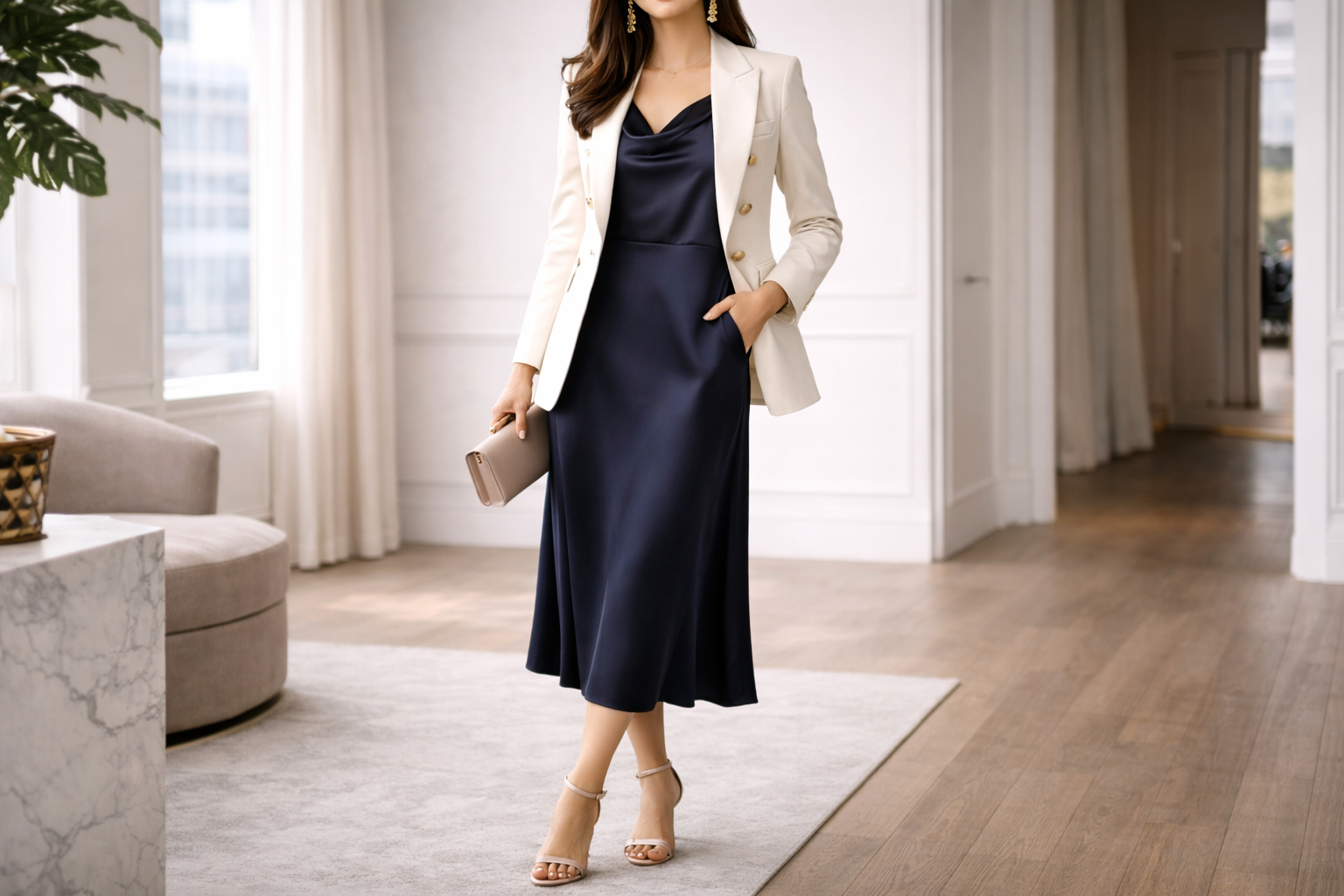
The Foundation: Build with Versatility in Mind
The key to a smooth transition begins before the day even starts. A well-chosen base outfit acts as a canvas that can shift tone with minimal effort.
Core Principles of a Transitional Base Outfit:
Neutral Color Palettes: Black, navy, charcoal, ivory, camel, and deep jewel tones carry authority in the office and sophistication at night.
Tailored Silhouettes: Structure reads professional by day and sleek by evening.
Quality Fabrics: Wool blends, silk, crepe, and premium cotton maintain shape and resist wrinkling throughout long days.
Minimal Daytime Accessories: Starting simple gives you room to build.
Think of your daytime look as “professionally understated,” not “fully accessorized.” This leaves room for elevation rather than replacement.
Layering: The Executive’s Best Tool
Layering is the fastest way to transform an outfit without changing it. A blazer, jacket, or structured cardigan defines professionalism, while removing or swapping that layer can immediately soften or glamorize the appearance.
Day to Evening Layer Strategies:
Blazer → Statement Jacket: Swap a conservative blazer for a leather, velvet, or textured evening jacket.
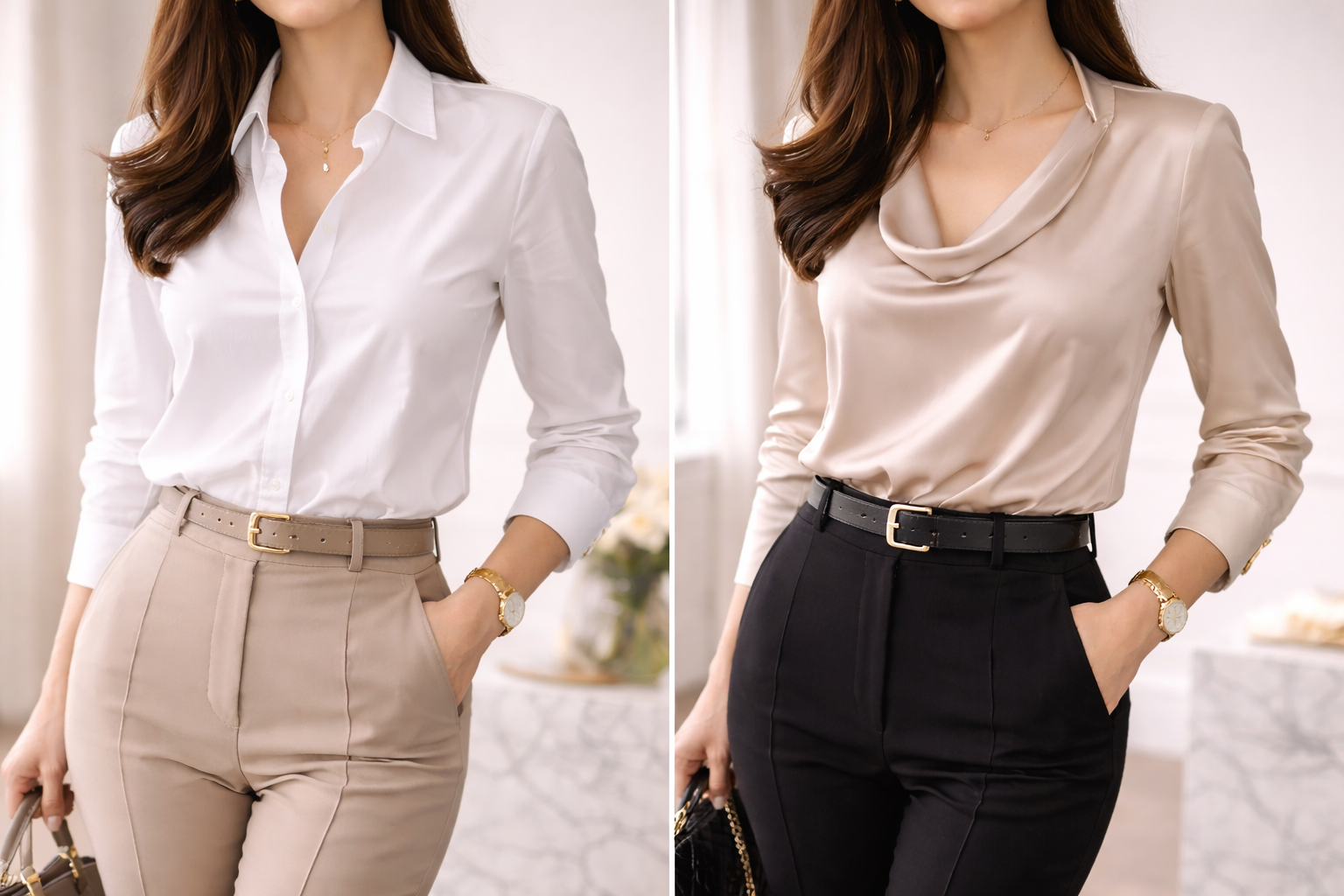
Button-Down → Silk Blouse: Keep the same trousers or skirt, but change the top layer.
Structured Vest → Open Drape: Removing rigidity creates instant evening fluidity.
Sleeve Adjustments: Rolling sleeves or unbuttoning cuffs subtly shifts tone.
The transition does not need to be dramatic. Even removing one structured layer can create a relaxed yet intentional after-hours aesthetic.
Accessories: Small Changes, Major Impact
Accessories are the most efficient transformation tool. They require minimal space, minimal time, and deliver maximum visual shift.
High-Impact Accessory Swaps:
Footwear: Pumps to strappy heels, loafers to sleek boots, or polished dress shoes to minimalist leather sneakers (for creative industries).
Jewelry: Studs to statement earrings, simple chains to layered necklaces, leather bands to metallic watches.
Belts: Swapping a conservative belt for a bold buckle instantly changes the silhouette.
Bags: Structured tote to compact clutch or crossbody.
Professionals who keep a small “transition kit” in their car or office drawer — jewelry, lipstick, compact mirror, and alternate shoes — maintain effortless readiness.
Grooming & Finishing Touches
Outfit transitions are not purely about clothing. Grooming and presentation play an equal role in signaling a shift from corporate to social.
Quick Grooming Adjustments:
Refresh makeup or add a bold lip.
Switch from matte to luminous skin finish.
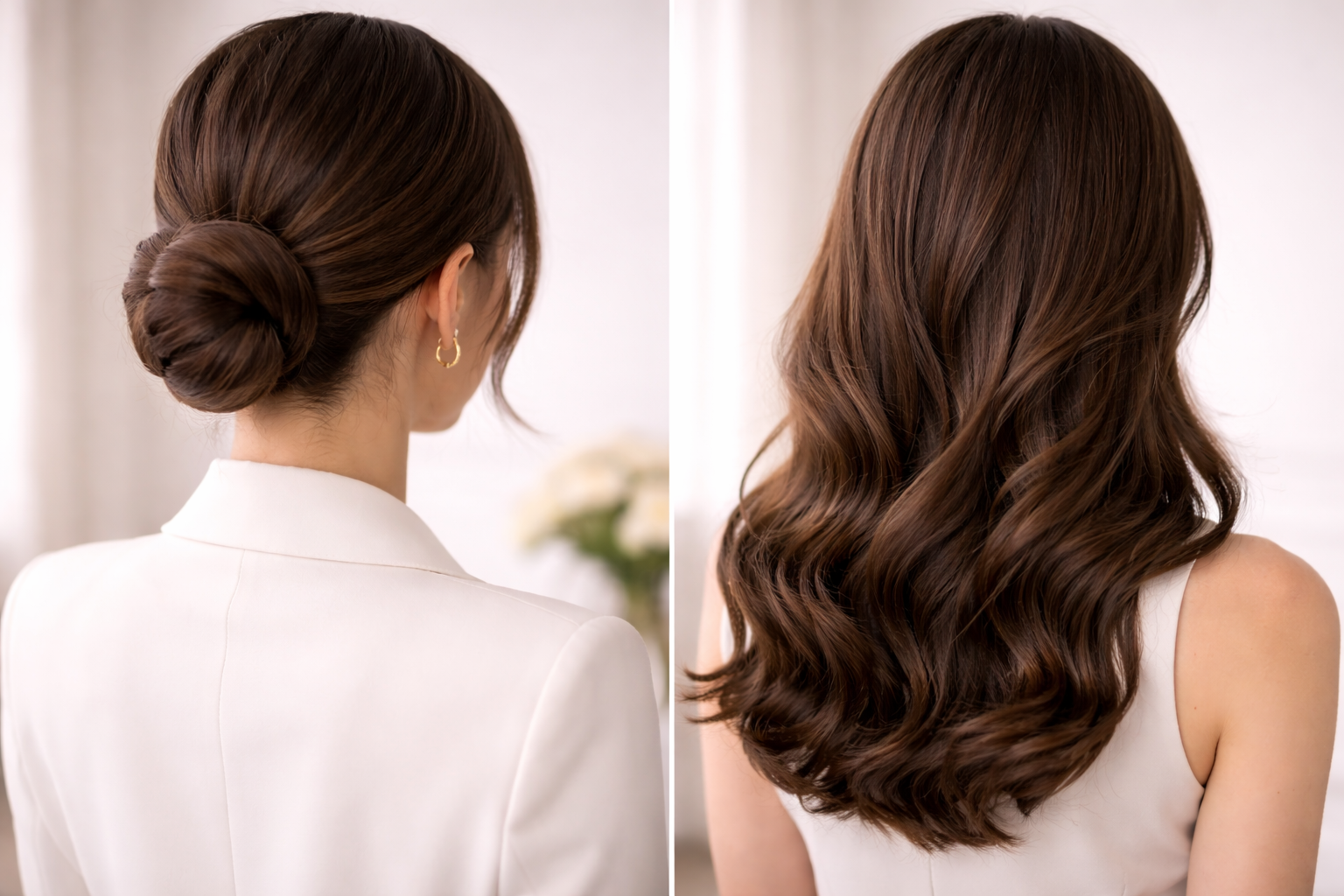
Adjust hairstyle — a low bun released into soft waves or a sleek ponytail raised higher.
Light fragrance application.
These small refinements communicate intention, not fatigue, at the end of a long day.
Gender-Neutral Transition Strategies
While fashion advice often becomes segmented, seamless transitions work across all wardrobes.
Universal Transition Moves:
Removing ties or loosening collars.
Swapping office shoes for refined evening footwear.
Introducing texture — suede, satin, leather.
Rolling sleeves or adjusting cuffs.
Elevating with metallic or statement accessories.
The focus remains on refinement, not reinvention.
The Psychology of Seamless Style
Professionals who master outfit transitions communicate three powerful messages:
Preparedness: You anticipate opportunities.
Efficiency: You respect your time and others’.
Confidence: You control your image rather than reacting to it.
Style is not vanity; it is visual communication. A seamless transition signals adaptability without compromising authority — a critical trait in leadership and executive presence.
Final Thought: Strategy Over Quantity
The most polished professionals do not own the largest wardrobes; they own the most intentional ones. A carefully curated closet filled with adaptable, high-quality pieces eliminates the stress of after-hours engagements and replaces it with quiet confidence.
When your wardrobe works as hard as you do, transitioning from office to evening becomes less about changing clothes — and more about revealing the next layer of your presence.
#personalstylist #Stylistblog #FashionBlog #PersonalBrand #Stylistformen #Styleexpert
