
Enclothed Cognition: How Clothing Outfit Transitions
In professional environments, clothing is often dismissed as superficial — a finishing touch rather than a functional tool. Yet research in cognitive psychology tells a different story. The concept of enclothed cognition suggests that the clothes we wear influence not only how others perceive us, but how we perceive ourselves, how we think, and ultimately how we perform.
This is not about vanity. It is about behavioral priming. When you dress with intention, you subconsciously align your mindset with the traits associated with those garments — authority, precision, creativity, or discipline. Clothing becomes less about aesthetics and more about mental positioning.
For executives and professionals operating in high-stakes environments, this psychological edge is not trivial. It is strategic.
Clothing as a Cognitive Cue

Every garment carries symbolic meaning. A tailored blazer communicates structure. A crisp button-down signals preparedness. A refined dress or structured suit can evoke authority and decisiveness. When you wear these pieces, you are not just sending signals outward — you are sending signals inward.
Professionals who intentionally dress for their day often report:
Increased focus and task commitment
Higher confidence during negotiations and presentations
Greater sense of personal discipline
Improved posture and physical presence
Stronger perception of readiness and competence
This effect compounds over time. Consistency in professional dress becomes a ritual that trains the brain to switch into performance mode.
The Executive Advantage: Dressing for Mental Clarity
Leaders are decision-makers. Decision fatigue is real, and wardrobe choices can either add friction or remove it. A well-curated professional wardrobe functions like a pre-built system — reducing morning indecision and conserving mental energy for higher-level thinking.
Key benefits of executive wardrobe strategy include:
Cognitive Efficiency – fewer trivial decisions, more bandwidth for strategic thinking
Identity Alignment – clothing that reflects leadership role reinforces internal authority
Predictable Confidence – reliable outfits reduce uncertainty before high-pressure moments
Consistency of Presence – others know what to expect, building trust and recognition
In other words, intentional dressing is not about excess — it is about optimization.
The Performance Wardrobe vs. The Comfort Trap
Modern workplace culture has blurred the line between comfort and complacency. While comfort has value, there is a psychological distinction between feeling physically at ease and mentally prepared to perform.
Athletes do not compete in pajamas, not because pajamas are uncomfortable, but because they are psychologically misaligned with performance. The same principle applies to boardrooms, presentations, and negotiations.
A performance wardrobe does not mean rigid formality. It means structured comfort — garments that allow mobility while maintaining visual authority. Elevated casual, tailored essentials, and refined textures can achieve both ease and executive presence simultaneously.
Color, Fit, and Fabric: The Silent Influencers
Subtle wardrobe details also influence cognitive and social outcomes.
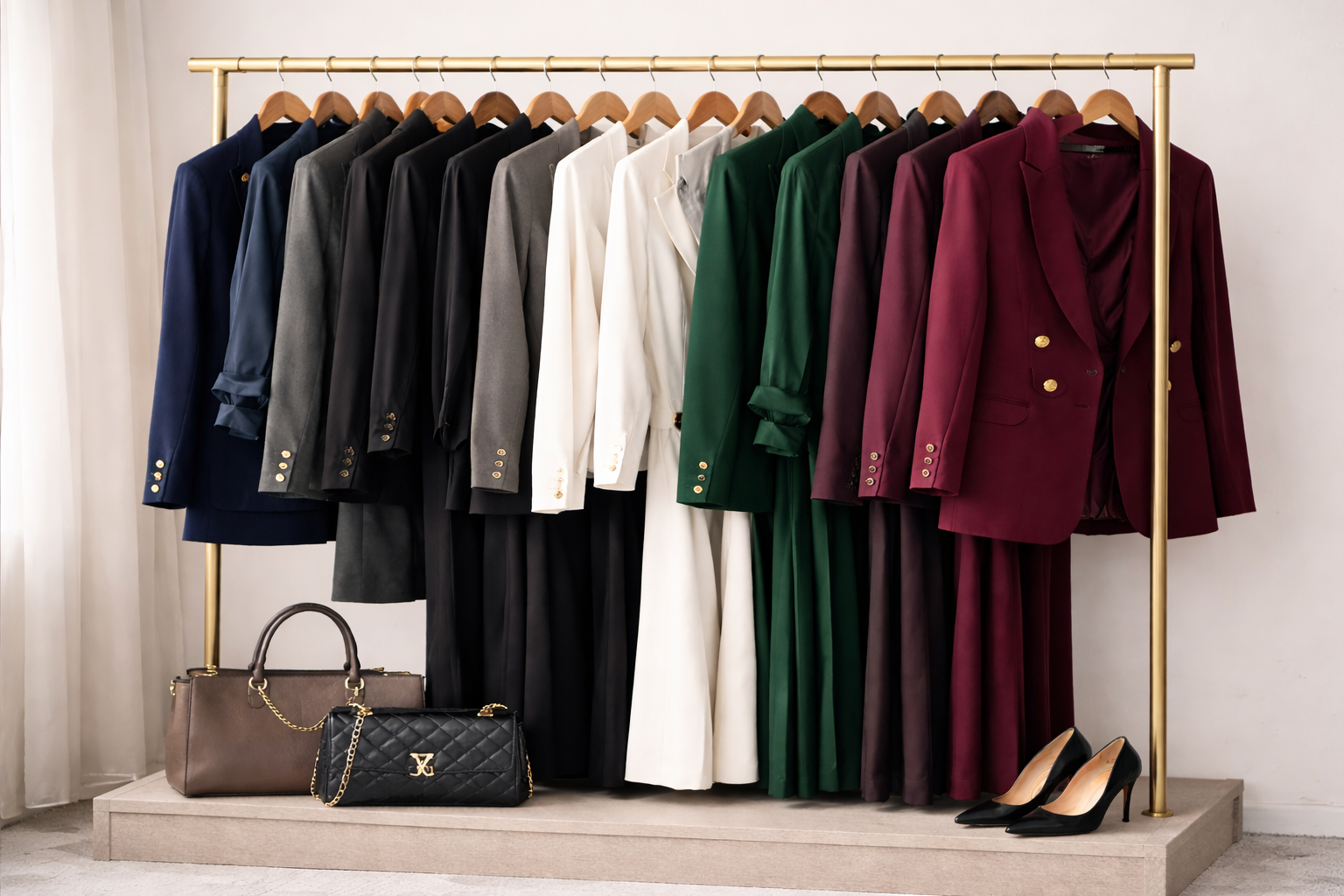
Color Psychology
Navy and charcoal convey reliability and intelligence
Black signals authority and decisiveness
White communicates clarity and precision
Deep greens and burgundies project confidence without aggression
Fit
Proper tailoring improves posture and body language
Clean silhouettes reduce visual distraction
Well-fitted clothing enhances perceived competence

Fabric
Structured fabrics (wool blends, twill) promote formality and focus
Soft but polished textures (cashmere, high-quality knits) balance approachability with refinement

These elements function as non-verbal tools that quietly shape interactions before a word is spoken.
Ritualizing Success Through Style
High performers across industries share one habit: intentional preparation. Clothing can be part of this ritual. When getting dressed becomes a deliberate act rather than an afterthought, it signals the brain that the day has purpose and direction.
Consider the wardrobe as a uniform for ambition — not restrictive, but empowering. The goal is not uniformity of appearance, but consistency of mindset.
Practical Applications for Professionals
To leverage enclothed cognition effectively, professionals can adopt a few strategic practices:
Build a Core Capsule: Invest in versatile, high-quality foundational pieces
Dress for the Highest Task of the Day: Align outfit formality with your most important meeting, not your least
Establish Signature Elements: A consistent accessory, color palette, or silhouette builds identity recognition
Prioritize Tailoring: Fit often matters more than brand or price
Plan Ahead: Pre-select outfits for critical days to remove morning friction
These small shifts create a compounding effect on confidence, clarity, and perceived authority.
The Takeaway
Clothing is not merely external decoration — it is an internal performance tool. For executives and professionals, the wardrobe is an extension of leadership strategy, communication, and self-discipline. Enclothed cognition reminds us that what we wear influences how we think, and how we think influences how we perform.
In a world where competitive advantage is often measured in marginal gains, intentional dressing is a subtle yet powerful lever. When attire aligns with ambition, the mind follows — and performance rises to meet it.
#personalstylist #Stylistblog #FashionBlog #PersonalBrand #Stylistformen #Styleexpert
